My specialty is shooting in industrial environments and editing for clarity and concision, while maintaining brand standards.
I’ve combined two different use cases here:
1. In several cases, clients needed a way to explain their process itself, not just how to navigate around the plant.
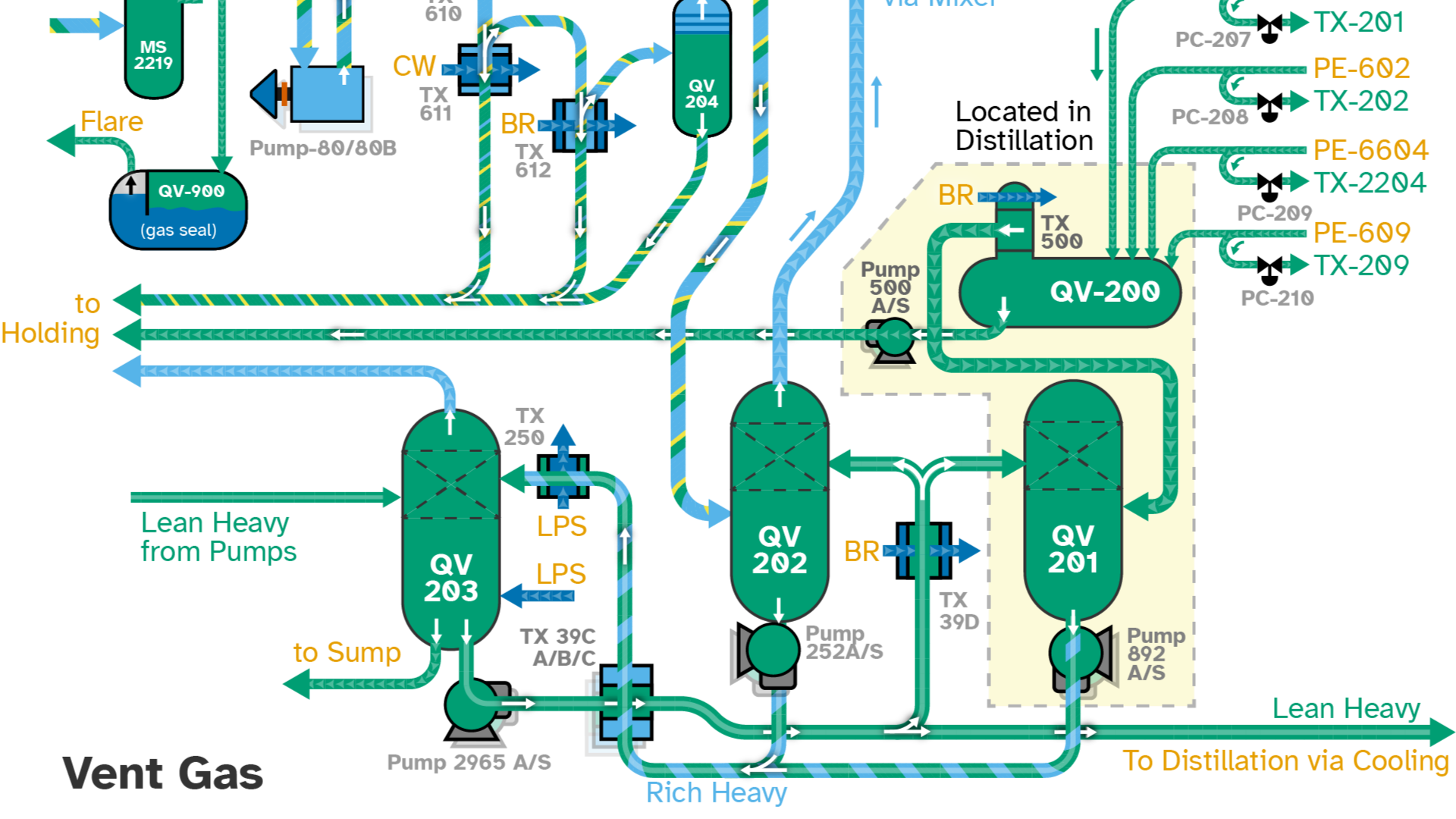
I was called in to synthesize complex engineering documents, control screens, and interview data to create a clear picture of their process for new hires. The petrochemical diagrams at the top are three of around two dozen layered diagrams that emphasize heat exchange and pipe contents at different points in their process.
These illustrations were primarily used in Instructor-Led Training, and were made at different levels of detail for different skill levels. Typography and colors were chosen for accessibility first.
(All diagrams on this page have been anonymized)
Clients
- petrochemical
- timber
- glass
2. In the last case the client was my own department, trying to demonstrate for a new glassmaking client how we recommended they structure their new hire program, and how that would reduce redundant training
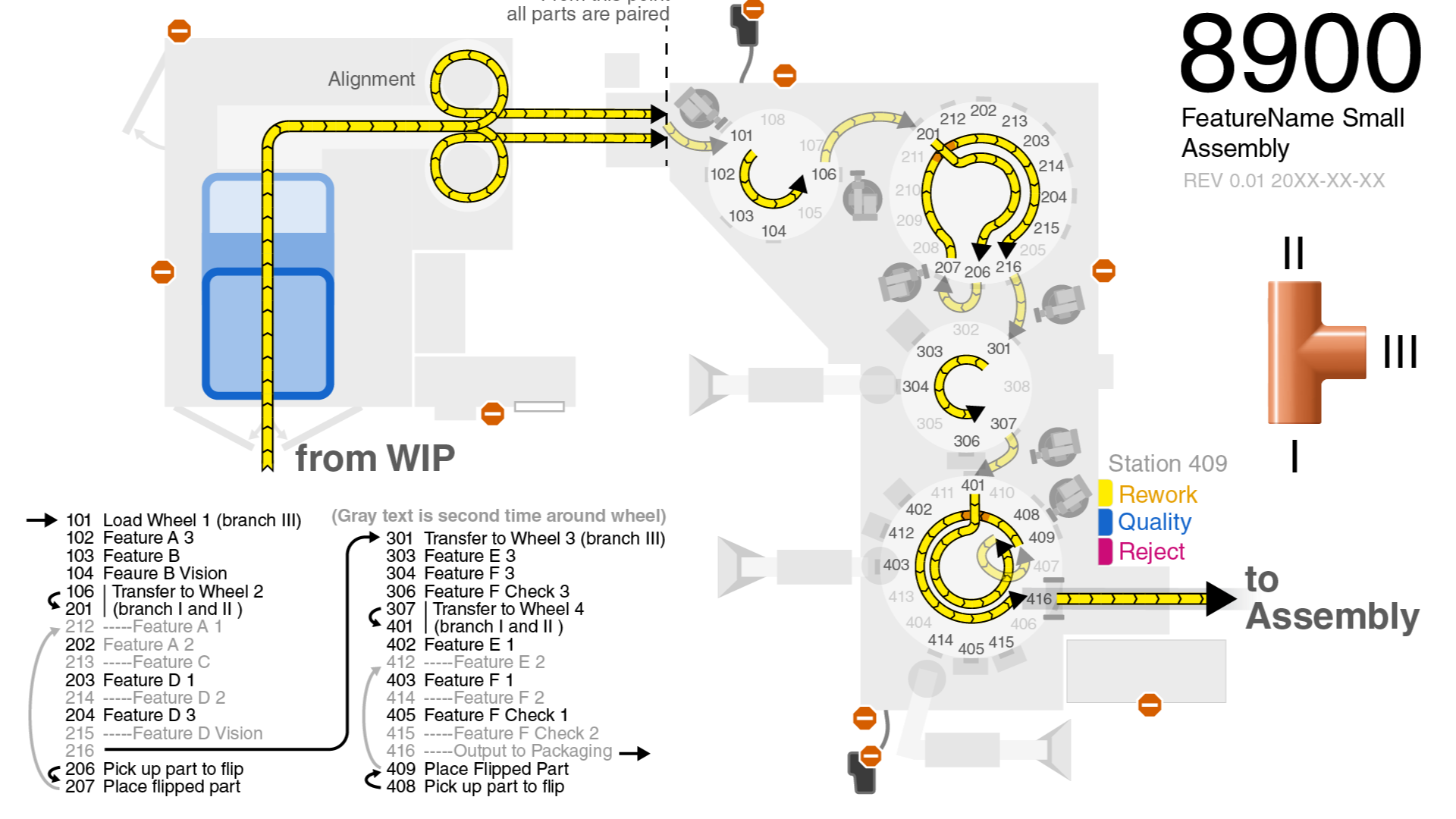
As a part of several larger contracts, I created layered maps to be used as job aids, presentation supporting graphics, and onboarding material for new employees who often get lost in massive production facilities, and need to know where safety fixtures are.
(Text Labels have been anonymized.)
Each time, I:
- assessed what systems and landmarks needed to be captured
- traveled to the site for photography and manual map sketching
- interviewed SMEs onsite and conducted whiteboarding sessions
- synthesized safety and engineering maps with the data I’d gathered into a clear picture of the site
- incorporated the client’s brand and accessible design principles as needed
Client Industries:
- Metal machining
- Frozen Foods
- Petrochemical
- Timber
- Glass
ToolingU-SME Talent and Workforce Services (my employer) often needs to engage client executives above the level of the stakeholders in the early stages of projects.
Previously, I also did freelance branding, and contracted with One Wheel Marketing
Most of TU-SME’s (my employer) clients need extensive documentation and training materials such as work instructions, assessment templates, Peer trainer resources, Training presentations, etc.
I was brought in to brand templates and in some cases build documents, with the goal of:
- providing a consistent experience that doesn’t distract from the content
- ensuring the trainees know their employer is taking their end of the deal seriously, and welcoming them into their culture
- helping the client stakeholder gain internal support
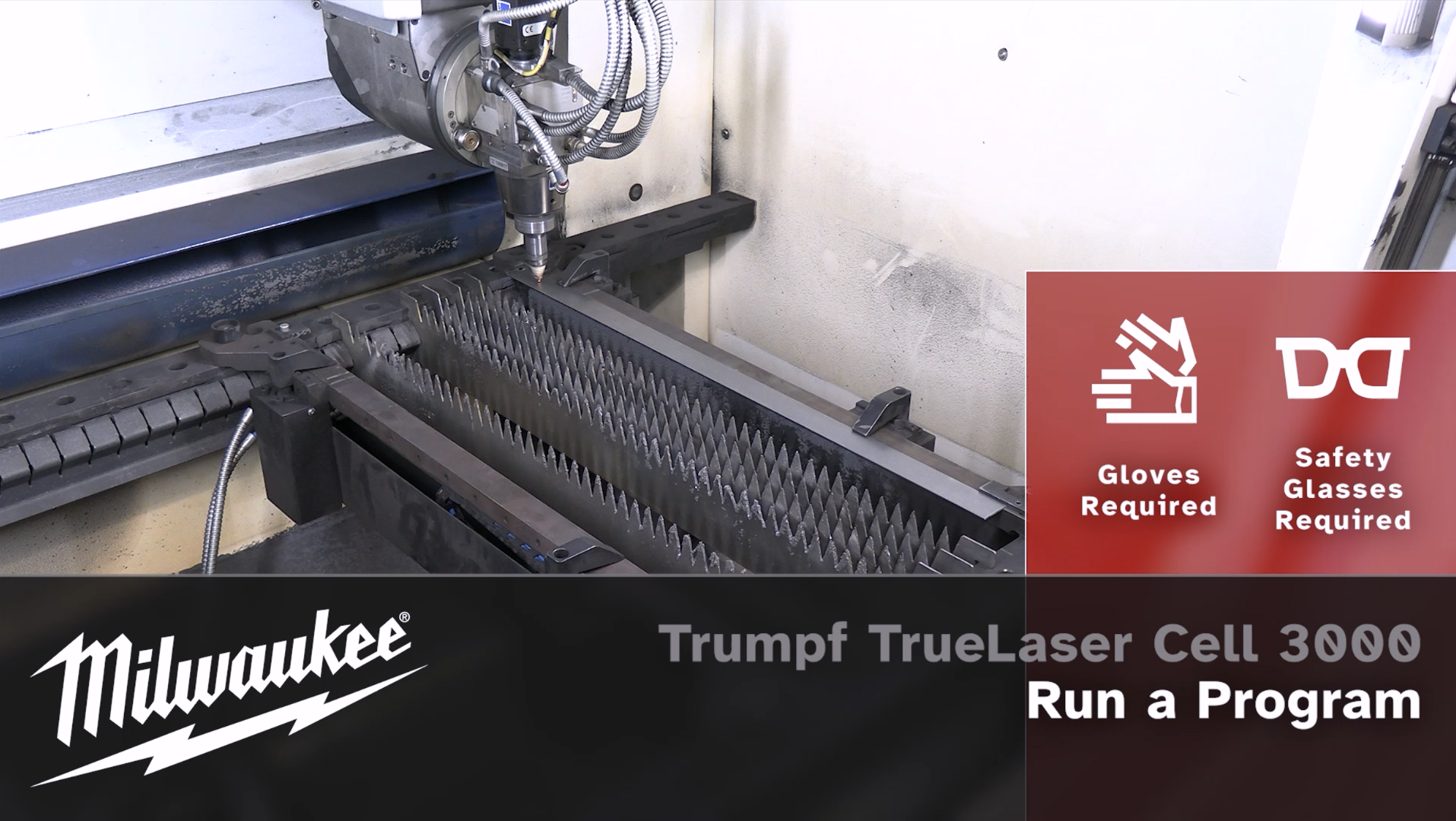
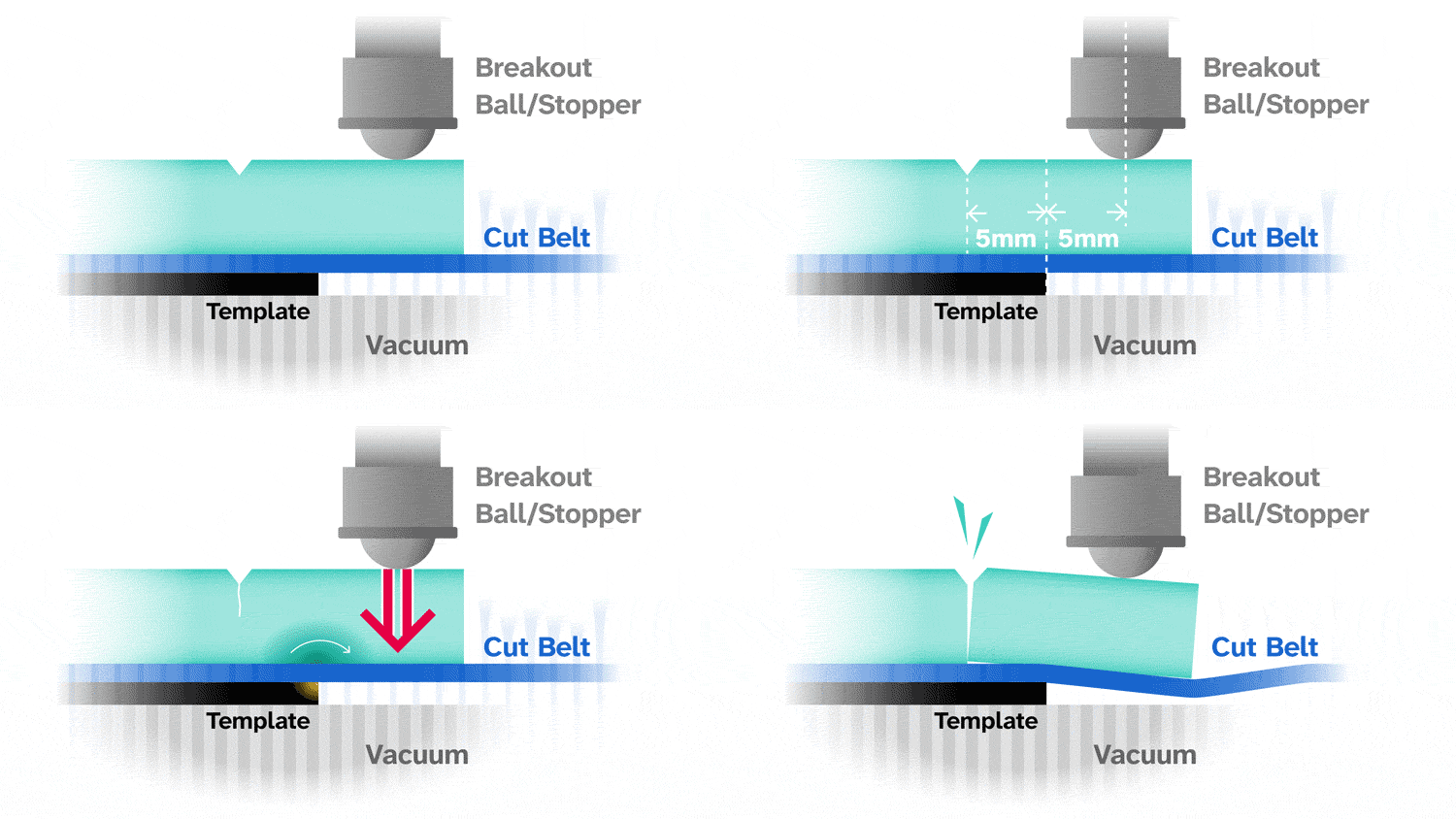
Often photos of machinery are a uniform steel gray, taken in a plant with poor lighting, so it can be hard to understand what you’re looking at.
In those cases I was brought in to create accessible, readable diagrams and animation in Adobe Illustrator and Premiere Pro.
Most of these were animated directly in Articulate Storyline so the client could edit them in the future without an additional subscription.
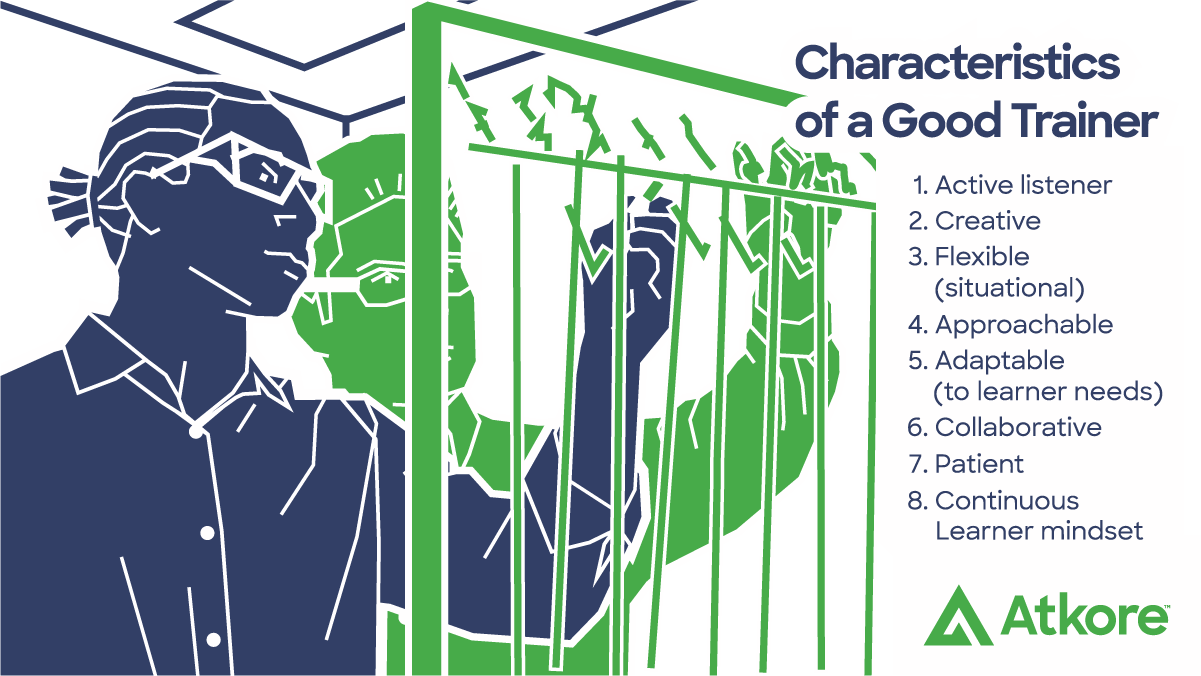
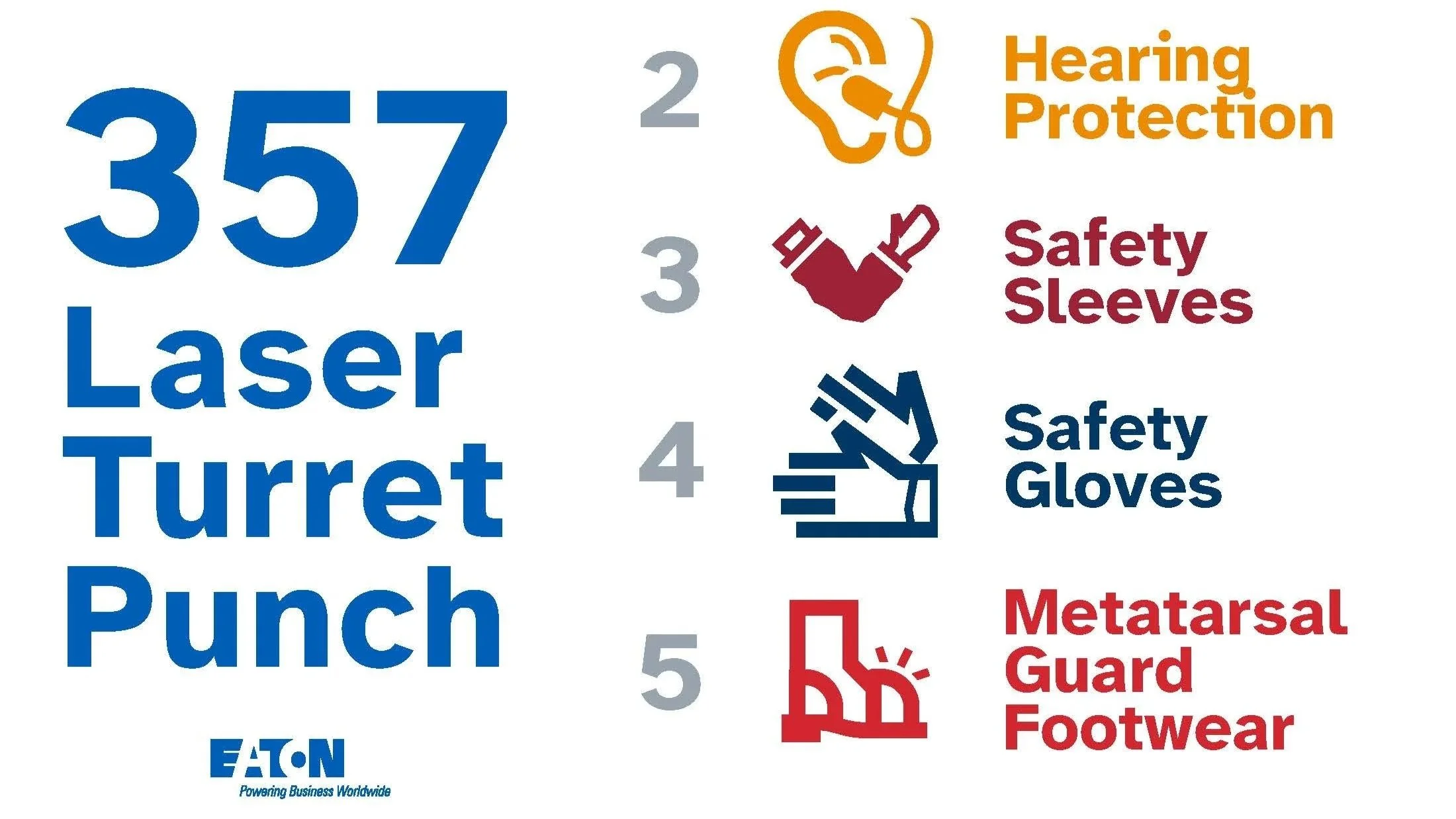
Across all deliverables, icons:
- reduce the amount of unbroken text a reader needs to process at once
- provide established learners with a visual shorthand for a complex concept in something like a work instruction
- allow brand voice to shine through on otherwise generic pages
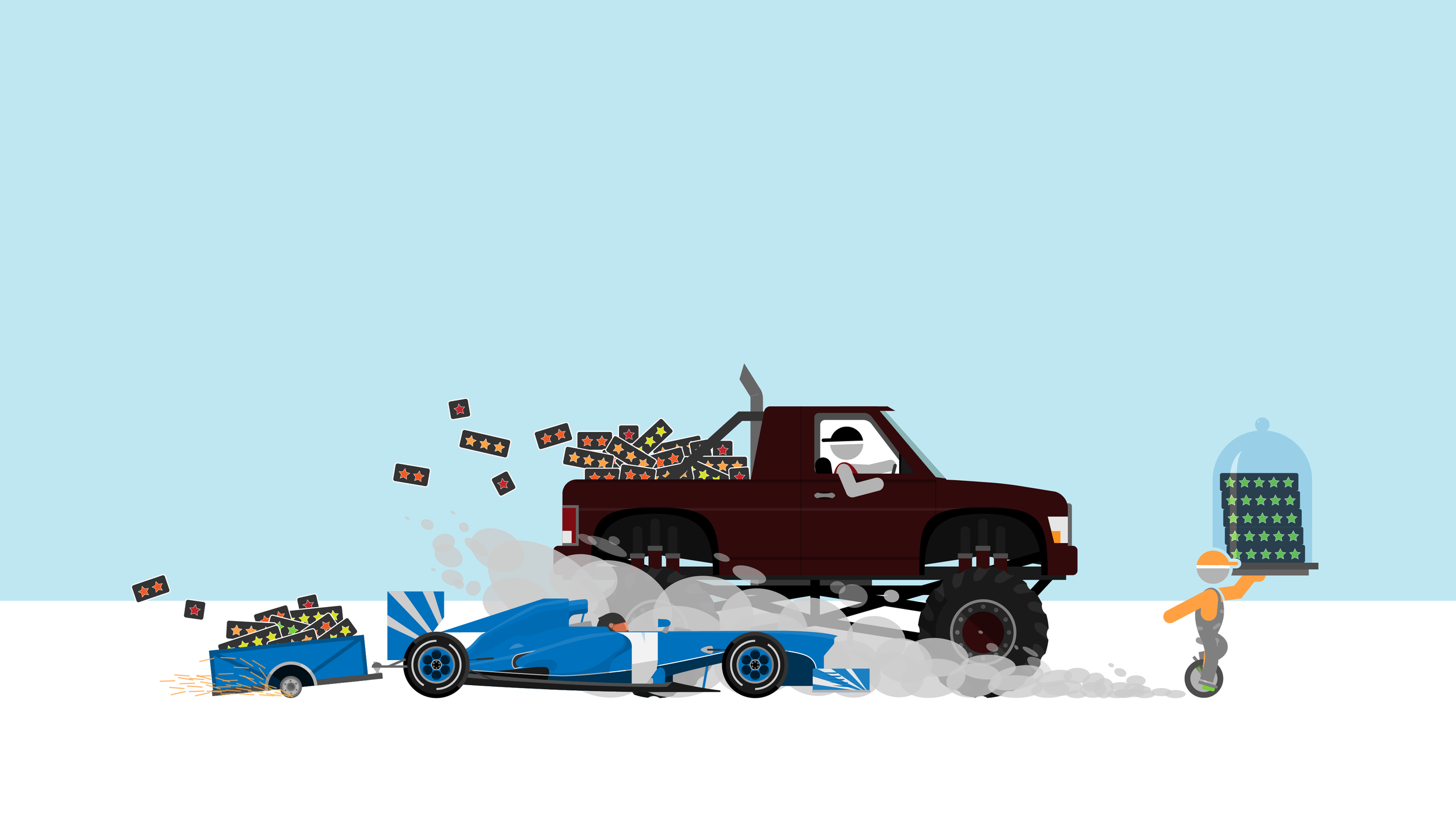
OneWheel Marketing is a growing small business marketing firm. In 2017 they offered a suite of services centered around building a whole squarespace website in a day. I was brought in to brand that offering and others, starting with a logo and two colors. That illustration and the animation my coworker applied to it landed us a job doing instructional animation for a mental health nonprofit, Learn to Live. This was between day-long website sprints with the client on-hand for content and branding questions.
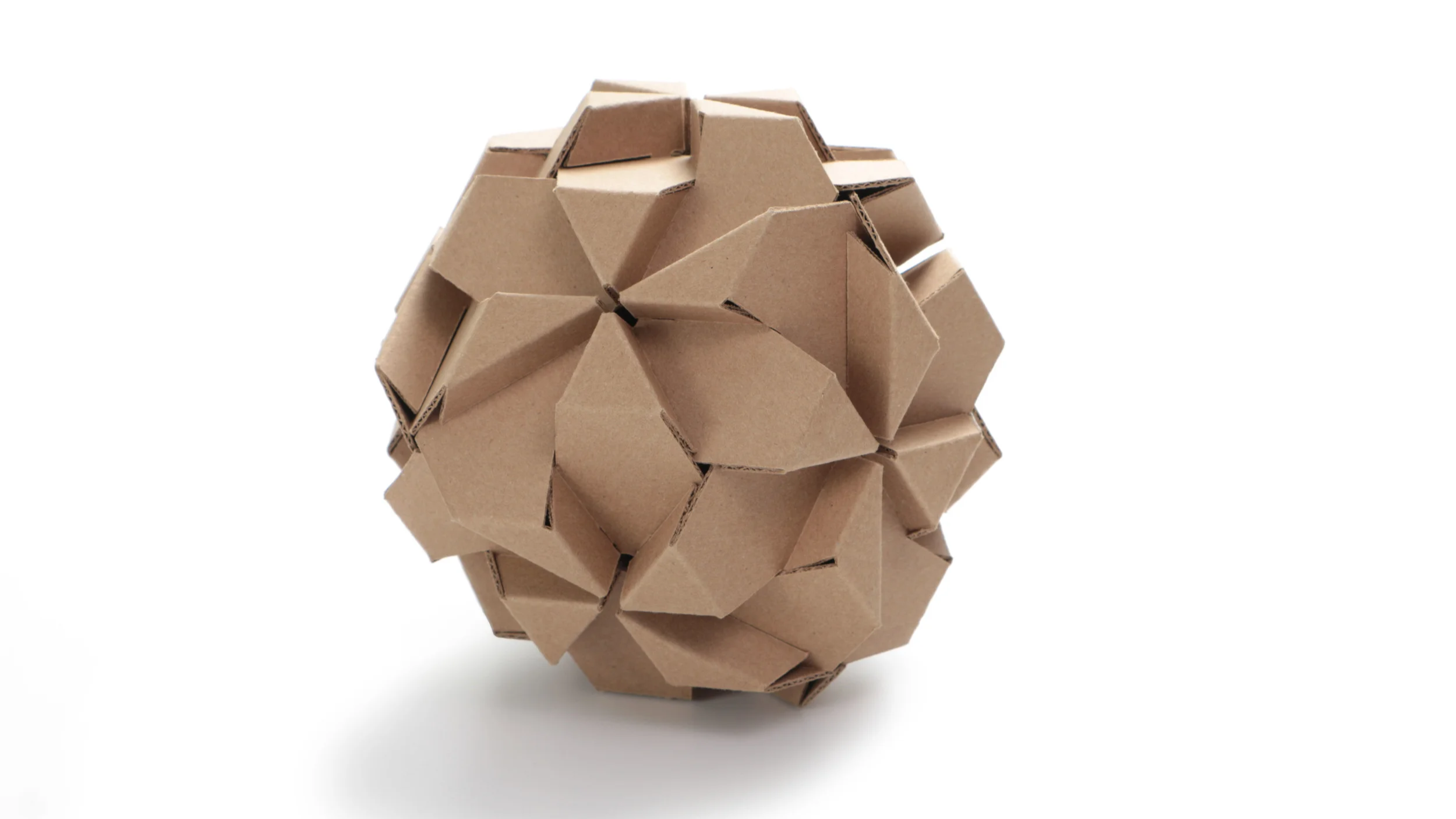
A “Boxel” is a 12-sided, corrugated cardboard building block with rhombus-shaped (diamond) sides, of my own design. Each block is made of twelve mechanically cut and folded panels which can be assembled without additional hardware or glue. The underlying geometrical shape of a Boxel is called a rhombic dodecahedron.
Boxels of the same size can pack together and tile infinitely. Boxels of any size can be connected, though not if they are connected to the same differently-sized block.